Mindfulness
Why a Daily Game Routine Changes More Than You'd Expect
How a daily puzzle habit quietly changes your focus, mood, and momentum. The real benefits of a daily puzzle routine, and how to start in five minutes.
When people hear "daily puzzle habit," they tend to file it under "harmless little time-waster," somewhere between checking the weather and scrolling a feed. But there's a real difference between scrolling and solving, and once you've kept a daily game routine going for a few weeks, you start to feel it. Something small, done every day, has a way of becoming something bigger than it looks.
The power of a small, finished thing
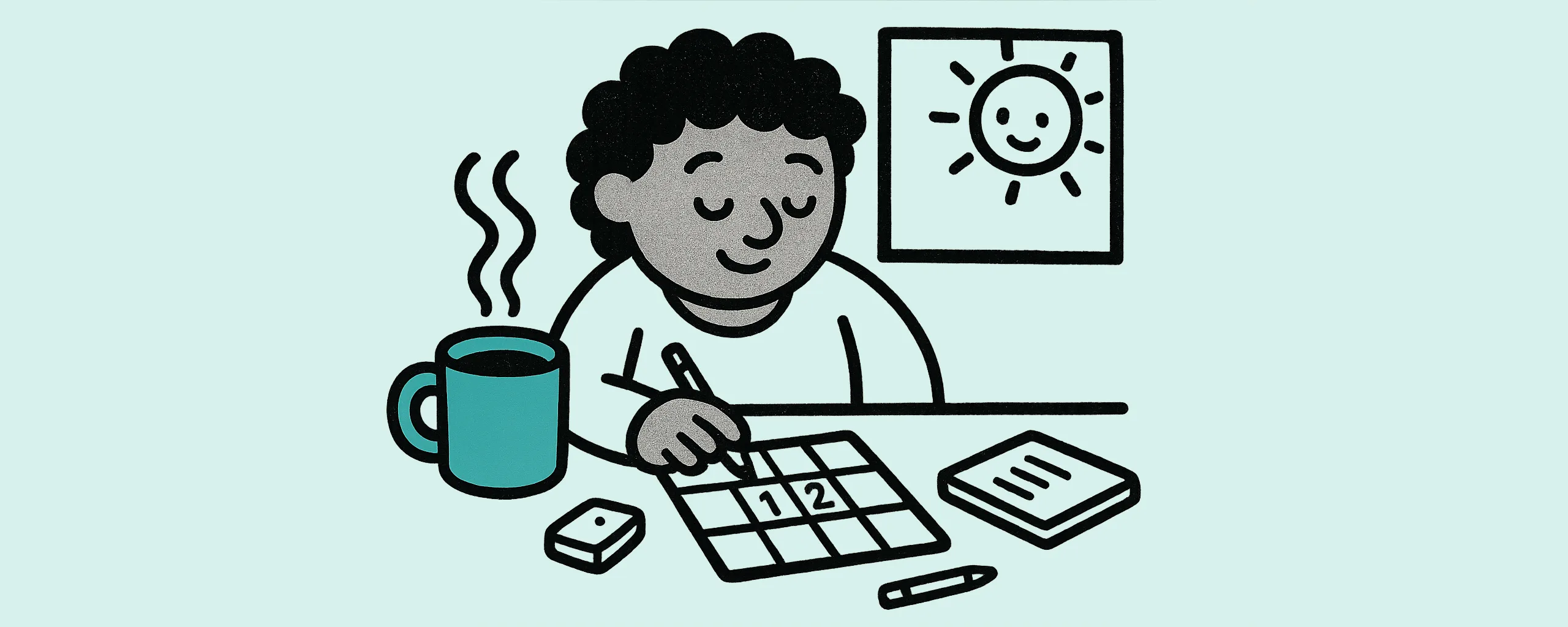
Most of modern life is unfinished. Your inbox is never empty, your to-do list regenerates overnight, the projects stretch on for months. You rarely get the clean satisfaction of "done." A daily puzzle hands you exactly that, on purpose. You sit down, you solve it, and it is genuinely, completely finished. There's nothing left to do until tomorrow.
That tiny hit of completion matters more than it should. Starting your day by actually finishing something, anything, sets a quiet tone of momentum. You've already won once before your feet hit the floor properly. It's a small psychological trick, but small psychological tricks repeated daily are basically what a good life is made of.
Why the brain likes the ritual
There's also comfort in the rhythm itself. The same game, at the same time, in the same chair, becomes an anchor in a day that's otherwise unpredictable. Rituals like this lower the mental cost of getting started on anything, because your brain isn't deciding whether to do it. It just does it. The decision was made weeks ago.
And because the game asks for real but pleasant effort, it works as a gentle warmup for your attention. Spending five minutes on something like a quick game of Angler, where you have to actually look carefully and commit to a judgment, eases your mind into focus mode in a way that doom-scrolling never will. One leaves you sharper. The other leaves you foggy. You already know which is which.
The difference between solving and scrolling
This is the heart of it. A feed is designed to never end, so it never gives you that clean stopping point, which is exactly why you look up forty minutes later wondering where the time went. A daily puzzle is designed to end. It respects your time by being finite. You play it, you're done, and the rest of your day is yours.
That single design choice changes the whole relationship. Instead of a habit that quietly takes from you, you've got one that gives a little back: a moment of focus, a small win, a clean finish. Over weeks, those moments compound into something that genuinely feels like self-respect.
Starting small is the whole point
The beauty of a daily game routine is that it costs almost nothing to begin. You don't need to carve out an hour or buy anything or rearrange your life. You need about five minutes and a puzzle worth solving. The low stakes are what make it stick, because a habit you can do on your worst, busiest, most exhausted day is a habit that survives.
So don't overthink the entry point. Pick a daily game to start with, play it tomorrow morning, and then again the morning after. Give it two weeks before you judge it. What surprises most people isn't the puzzles themselves. It's the quiet way the routine reshapes the start of their day, one finished thing at a time.