If you have cleared every five-letter Wordle in your feed and are hungry for something that requires a little more thinking before your fingers move, a 6 letter word game is the natural next step. The word grid gets wider, the solution pool gets richer, and several assumptions you have built up about opening moves and elimination order stop working quite so neatly. That is a good thing.
Why six letters changes the game more than you'd expect
At five letters, the puzzle genre has been iterated on so thoroughly that experienced players have settled opening words, practiced elimination patterns, and a reliable finishing ceiling of two or three guesses on a good day. Add one letter and almost everything resets.
The solution space grows substantially. English has far more common six-letter words than five-letter ones, which means the target could reasonably land on dozens of word shapes you might not think to chase early. Compound-feeling words, words with double vowels in the middle, words that end in consonant clusters that five-letter puzzles rarely use: all of these become fair game.
Positional guessing becomes both more powerful and more expensive. In a five-letter game, a single guess can confirm or eliminate a meaningful chunk of the alphabet relative to the grid. In a six-letter game, you are covering more positions, which means a bad opening word wastes more real estate. Vowel placement matters more because the sixth slot adds an entire new axis of uncertainty.
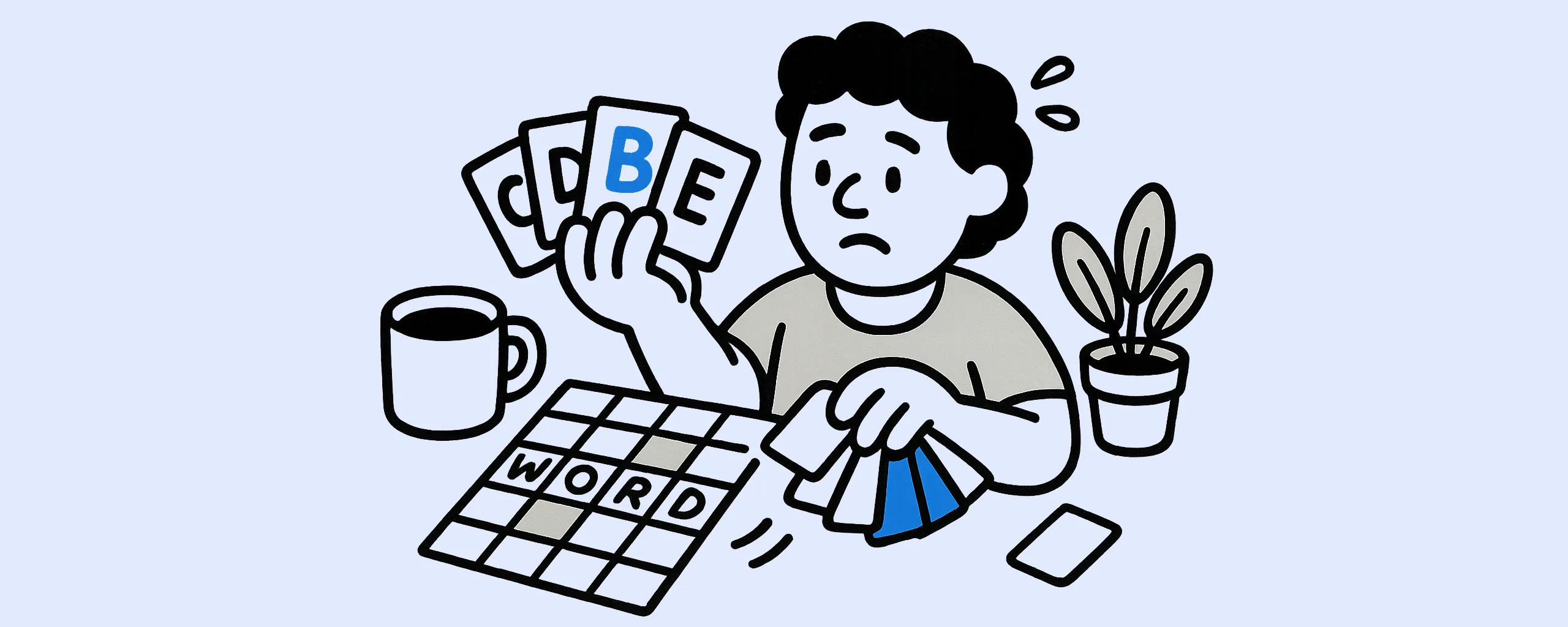
The psychology shifts too. Five-letter games feel sprint-like. Six-letter games have a slightly longer middle section where you are genuinely puzzling something out, weighing two or three possible words against the evidence you have collected. That middle stretch is where strategy lives.
Hard mode versus easy mode in six-letter games
One of the clearest tactical splits in any word guessing game is whether revealed letters must be used in subsequent guesses. Hard mode forces you to work with every confirmed letter immediately. This sounds like a handicap, but it is actually where a six-letter game reveals its depth.
With six positions, you can sometimes satisfy a hard-mode constraint and still gather new information in the same guess, because there are enough open slots to place a confirmed letter correctly while introducing two or three fresh consonants elsewhere. That compression of "use what you know" and "test something new" into a single row is a genuinely satisfying puzzle mechanic that is harder to engineer at five letters.
Easy mode, meanwhile, lets you run a pure elimination game: guess words you know cannot be the answer specifically to narrow the alphabet faster. In a six-letter format, this strategy is especially useful in the first two guesses, because the wider grid rewards broader elimination before you commit to a solution shape.
Where to play: Wordly
Wordly is Greatest Games' six-letter daily word game, and it is the cleanest implementation of this format we know of. The interface is straightforward, the word list is well-curated (you will not find yourself staring at obscure technical jargon), and the difficulty feels calibrated: hard enough to earn the solve, accessible enough that a careful player who has never tried six letters before will not feel lost after the first row.
Wordly offers both easy and hard modes, which means you can match the game to your mood rather than committing to one style forever. If you are coming from a five-letter habit and want a gentle on-ramp, easy mode lets you run the wide-elimination opening strategy you already know. When that starts feeling too comfortable, switching to hard mode on a six-letter board is one of the more satisfying difficulty bumps in the daily puzzle genre.
The vocabulary sweet spot is where Wordly earns its reputation among regulars. The answers tend to land on words that feel fair in retrospect: words you use, words you recognize immediately once the board fills in, words that produce that small, specific satisfaction of "of course, I should have seen that."
The practical side: how Greatest Games works
Greatest Games is a free library of original daily web puzzles. No account, no subscription, no notifications you did not ask for. Every puzzle, including Wordly, resets at midnight Eastern Time and takes around five minutes to complete. You play in your browser, on any device, and you are done before your coffee goes cold.
A few tactics to take into your first six-letter game
Start with two vowel-heavy words if you are playing easy mode. Six letters means more vowel positions to account for, and confirming which vowels are in play early saves you from expensive late-game guessing.
Think about word endings earlier than you would in a five-letter game. Six-letter words cluster around certain suffix patterns (words ending in "-tion," "-ness," "-ment," "-ing," and similar) in ways that five-letter words do not. Ruling out or confirming a two-letter ending combination in guess two or three meaningfully narrows the field.
Do not commit to a word shape too early. In five-letter games, experienced players sometimes lock into a solution after two guesses and spend the remaining rows confirming. In a six-letter game, that instinct can burn you. The wider grid supports one more row of genuine exploration before you plant your flag.
Try it today
If you have been playing the same five-letter routine long enough that the challenge has flattened out, give Wordly a session. The extra letter is not just a quantity change. It is a different kind of puzzle.